
Guides · Technical · 7 min read
Snow Load and Roof Design in North Idaho
By Josh Paulson · Owner, Paulson Construction · Idaho DOPL #3361976 · Building since 2012 · Published August 15, 2026
The short answer
Ground snow load is the design value, set by your local jurisdiction, that determines how your roof and deck structure must be framed. In North Idaho it varies significantly by location and rises sharply with elevation — Bonner County around Sandpoint carries higher loads than the Coeur d'Alene and Post Falls area, and loads climb further toward Schweitzer. Because the required value is site-specific and set locally, you must confirm the design snow load for your exact parcel with your county or city before finalising a roof plan.
Why this is the first structural question we ask
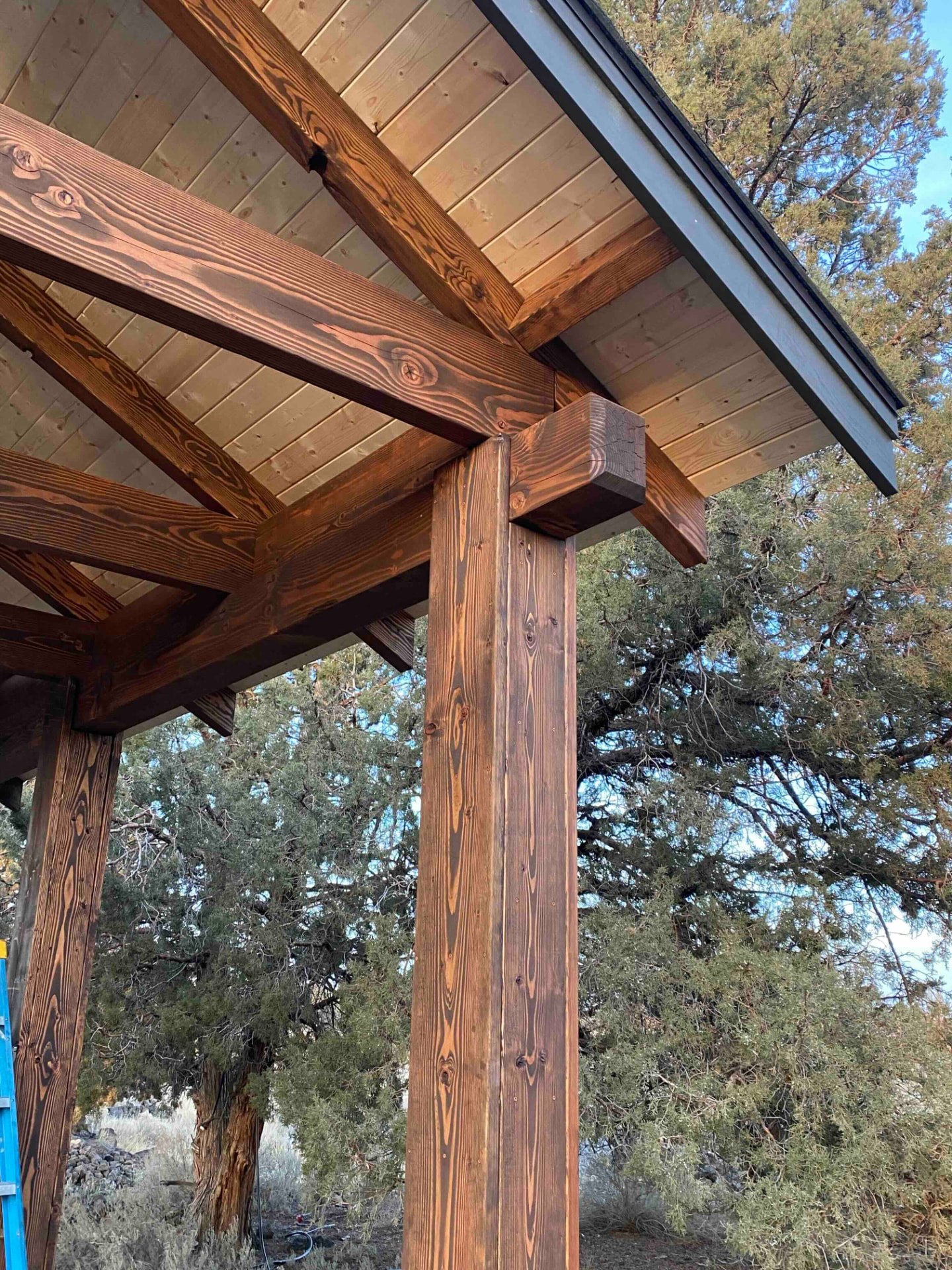
Snow load drives more of a North Idaho house plan than owners expect. It determines rafter or truss depth and spacing, beam sizing, post and footing loads, how far you can cantilever a deck, whether large open spans are affordable, and how roof-to-wall junctions must be detailed. Getting it right at design stage costs drawing time; getting it wrong costs structure.
Ground snow load versus roof snow load
Two different numbers, often confused:
- Ground snow load is the value published for your area, expressed in pounds per square foot.
- Roof snow load is what the structural design actually uses, derived from the ground load and adjusted for roof slope, exposure, thermal conditions and importance factor.
A steep, cold, exposed roof sheds differently than a low-slope, warm, sheltered one. This is why two houses in the same neighbourhood can carry different design roof loads.
Drift and sliding: the details that cause damage
Most snow-related failures we see are not whole-roof collapses. They are localised:
- Drift loads where a lower roof meets a taller wall, or against parapets and dormers. Snow accumulates far deeper here than on the open field of the roof, and the framing beneath must be designed for it.
- Sliding snow off a metal roof onto a deck, an entry, a walkway, a heat pump or a parked vehicle. This is a design decision, not an accident — decide early where snow will land.
- Ice damming at eaves, driven by heat loss through the roof assembly. The cure is air sealing and insulation, not just gutter heat cable.
- Valleys and entries, where accumulation concentrates and water gets driven back under roofing.
Design decisions worth making early
- Roof form. Simple forms with fewer valleys and level changes handle snow better and cost less to frame.
- Where snow lands. Position entries, decks, mechanical equipment and parking out of slide paths, or plan snow retention.
- Roof assembly. A well-air-sealed, well-insulated, properly vented assembly does more to prevent ice dams than any add-on.
- Deck framing. Decks carry snow too, and are frequently under-designed.
- Access. Plan how the roof will be cleared if it ever needs to be.
What to confirm before you finalise plans
Ask your jurisdiction — Kootenai County, Bonner County, Stevens County, or the relevant city — for the design ground snow load applicable to your parcel and elevation. Give that figure to your designer and engineer at the start. For background on how snow loads are derived, the governing standard is ASCE 7, Minimum Design Loads and Associated Criteria for Buildings and Other Structures, published by the American Society of Civil Engineers and referenced by the building codes adopted in both Idaho and Washington.
Sources
About the author
Josh Paulson is the owner of Paulson Construction, a family-owned building company working across North Idaho and Eastern Washington since 2012.
Owner, Paulson Construction · Idaho DOPL #3361976 · Building since 2012
Questions
Frequently asked questions
What is the snow load in North Idaho?
+
It varies by location and elevation and is set by the local jurisdiction. Bonner County around Sandpoint carries higher design loads than the Coeur d'Alene area, and loads rise sharply with elevation. Confirm the value for your specific parcel before designing.
What is the difference between ground snow load and roof snow load?
+
Ground snow load is the published value for your area. Roof snow load is what the structural design uses, derived from the ground load and adjusted for roof slope, exposure, thermal conditions and importance factor.
Why do roofs fail at the low side of a level change?
+
Drift. Snow accumulates much deeper where a lower roof meets a taller wall than it does on the open roof field, so that framing must be designed for the drift load specifically, not the general roof load.
Do metal roofs solve snow problems?
+
They shed well, which creates a different problem: you have to plan where the snow lands. Keep entries, decks, mechanical equipment and parking out of slide paths or install snow retention.
How do I stop ice dams?
+
Ice dams come from heat escaping through the roof assembly and melting snow that refreezes at the cold eave. Air sealing, adequate insulation and proper ventilation address the cause; heat cable only manages the symptom.
Related services
More guides